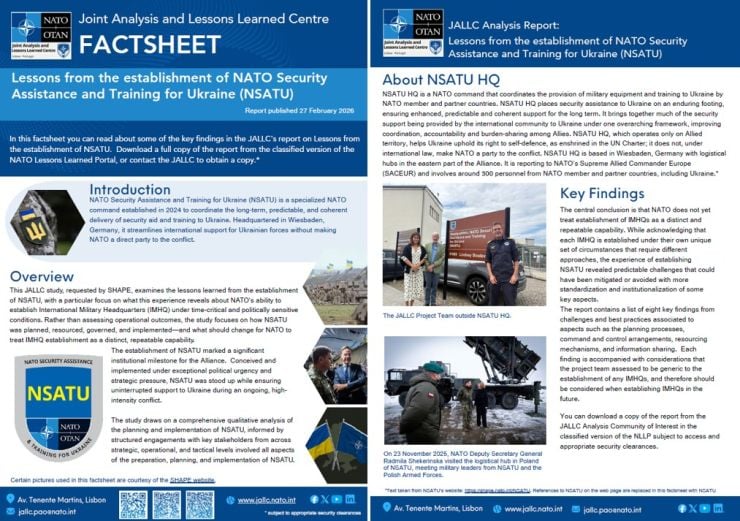
NATO Security Assistance and Training for Ukraine (NSATU) is a specialized NATO command established in 2024 to coordinate the long-term, predictable, and coherent delivery of security aid and training to Ukraine. Headquartered in Wiesbaden, Germany, it streamlines international support for Ukrainian forces without making NATO a direct party to the conflict.
NSATU HQ is a NATO command that coordinates the provision of military equipment and training to Ukraine by NATO member and partner countries. NSATU HQ places security assistance to Ukraine on an enduring footing, ensuring enhanced, predictable and coherent support for the long term. It brings together much of the security support being provided by the international community to Ukraine under one overarching framework, improving coordination, accountability and burden-sharing among Allies. NSATU HQ, which operates only on Allied territory, helps Ukraine uphold its right to self-defence, as enshrined in the UN Charter; it does not, under international law, make NATO a party to the conflict. NSATU HQ is based in Wiesbaden, Germany with logistical hubs in the eastern part of the Alliance. It is reporting to NATO’s Supreme Allied Commander Europe (SACEUR) and involves around 300 personnel from NATO member and partner countries, including Ukraine.*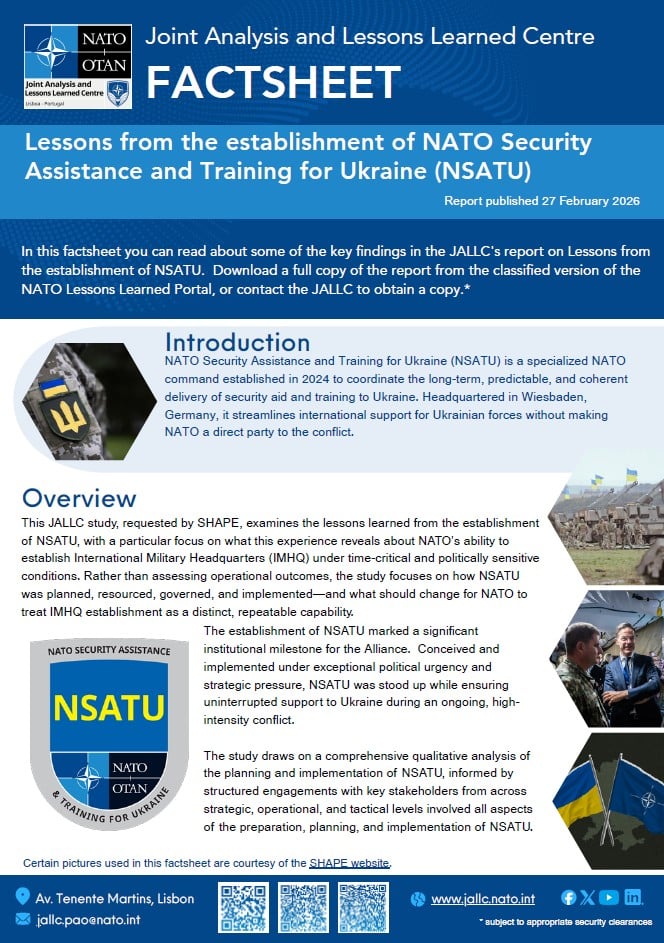
SHAPE asked the JALLC to examine the lessons learned from the establishment of NSATU, with a particular focus on what this experience reveals about NATO’s ability to establish International Military Headquarters (IMHQ) under time-critical and politically sensitive conditions. The analysis resulted in conclusions that NATO does not yet treat establishment of International Military HQs as a distinct and repeatable capability. While acknowledging that they are established under their own unique set of circumstances that require different approaches, the experience of establishing NSATU revealed predictable challenges that could have been mitigated or avoided with more standardization and institutionalization of some key aspects.
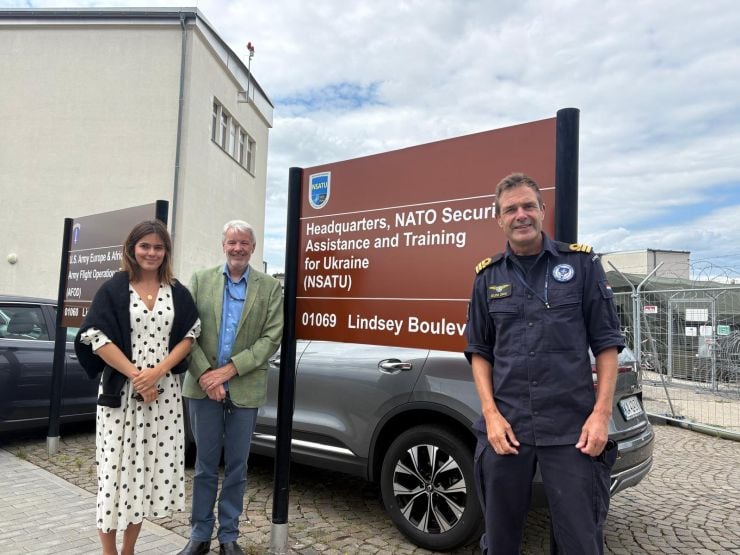
The report contains a list of eight key findings from challenges and best practices associated to aspects such as the planning processes, command and control arrangements, resourcing mechanisms, and information sharing. Each finding is accompanied with considerations that the project team assessed to be generic to the establishment of any IMHQs, and therefore should be considered when establishing IMHQs in the future. (JALLC Project team pictured left outside NSATU HQ)
You can download a copy ot the factsheet here, and a copy of the report from the JALLC Analysis Community of Interest in the classified version of the NLLP subject to access and appropriate security clearances. You can also visit our web page with all of the JALLC project factsheets here.