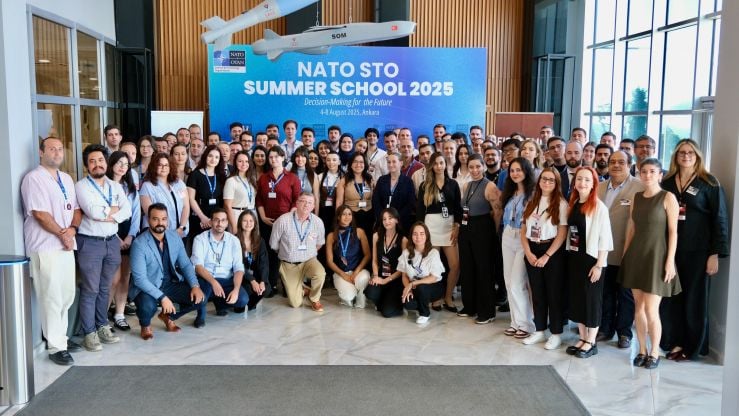
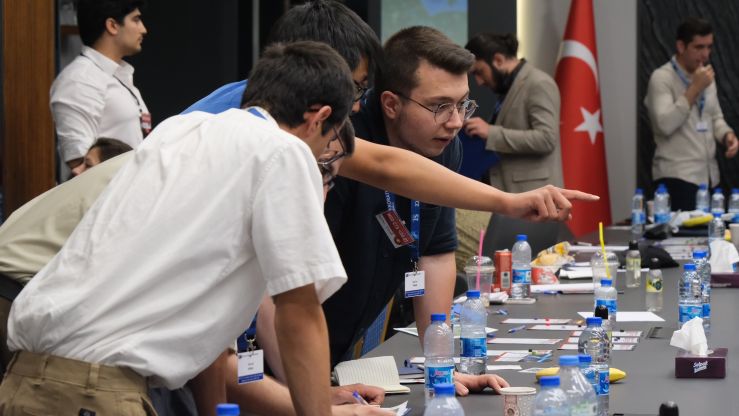
The JALLC recently participated in the annual Summer School, titled Decision-Making for the Future, in Ankara, Türkiye, from 5 to 8 August 2025, as part of its commitment to engaging the next generation of researchers, military officers, and young professionals.
The event provided a valuable platform to reflect on NATO’s mission, its strategic framework, and the broad range of opportunities available for young professionals to contribute to the Alliance.
Representing the JALLC, Ms. Jackie Eaton, our Principal Operational Research Analyst / LL Analysis Division, JALLC liaison officer to the NATO Science and Technology Organization (STO), and JALLC Innovation Facilitator, delivered a contribution that set the tone and context for the week. She introduced the key mechanisms NATO uses to make decisions, explaining the complex web of interrelated factors that influence the consensus decision-making process of the Alliance, and important role of consultation in uniting 32 sovereign nations in a common mission to protect the security of their populations.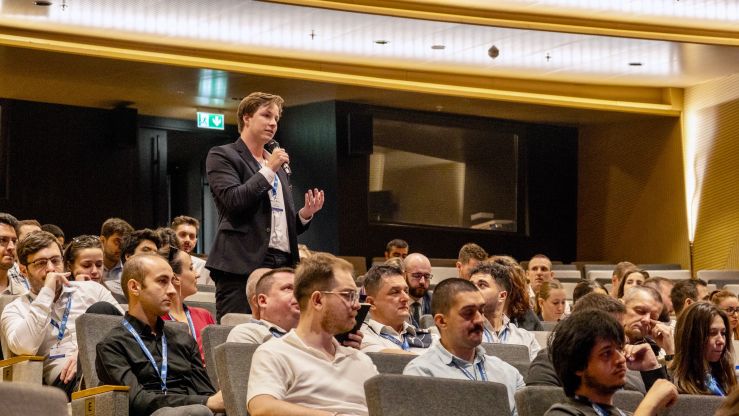
The programme further examined the skills and competencies sought across wider NATO vacancies, with particular attention to innovation-driven profiles. In this context, the JALLC’s active participation not only reinforced the organization’s role as NATO’s hub for lessons learned but also demonstrated the relevance of JALLC analysis and its immense value to the Alliance, and how JALLC is proactively engaging in shaping the Alliance’s innovation agenda in line with evolving security challenges.
The JALLC’s contribution to the STO programme reflects its broader mission to strengthen NATO’s learning culture, while also fostering meaningful collaboration between operational experience, academic research, and technological innovation. By doing so, the Centre ensures that NATO remains prepared, adaptive, and resilient in an increasingly complex security environment.
In