Each year, the JALLC analyses NATO Lessons Learned Portal content in accordance with the annually established SACT/SACEUR Lessons Learned priorities set out in the JALLC’s Programme of Work. This analysis results in the Key Issues and Trends (KIT) Report, which identifies both immediate operational issues and persistent trends affecting NATO.
Over the past four years, the JALLC has reported on topics as they appear in the NATO Lessons Learned, identifying, analysing, and synthesizing actual Lessons related information into digestible chunks for NATO to get to grips with. In 2026, the intent and style of the report has changed to eflect the evolving need for access to key Lessons coming from NATO exercises and external events that can be used to inform and shape NATO adaptation and transformation in a rapidly evolving security environment. This evolution in reporting alread started in 2025 when the JALLC produced the first ever unclassified sumary of the key topics presented in the KIT, intended to let a wider audience know that NATO is learning.
The new KIT, will present a high-level overview of the most relevant key issues and trends coing from analysis of all relevant NLLP content. These topics will be presented with their underlying causes and potential ways ahead and is intended to allow NATO leadership to amke informed decisions about adaptiation, innovation, and Capability Development.
2026 KIT Report
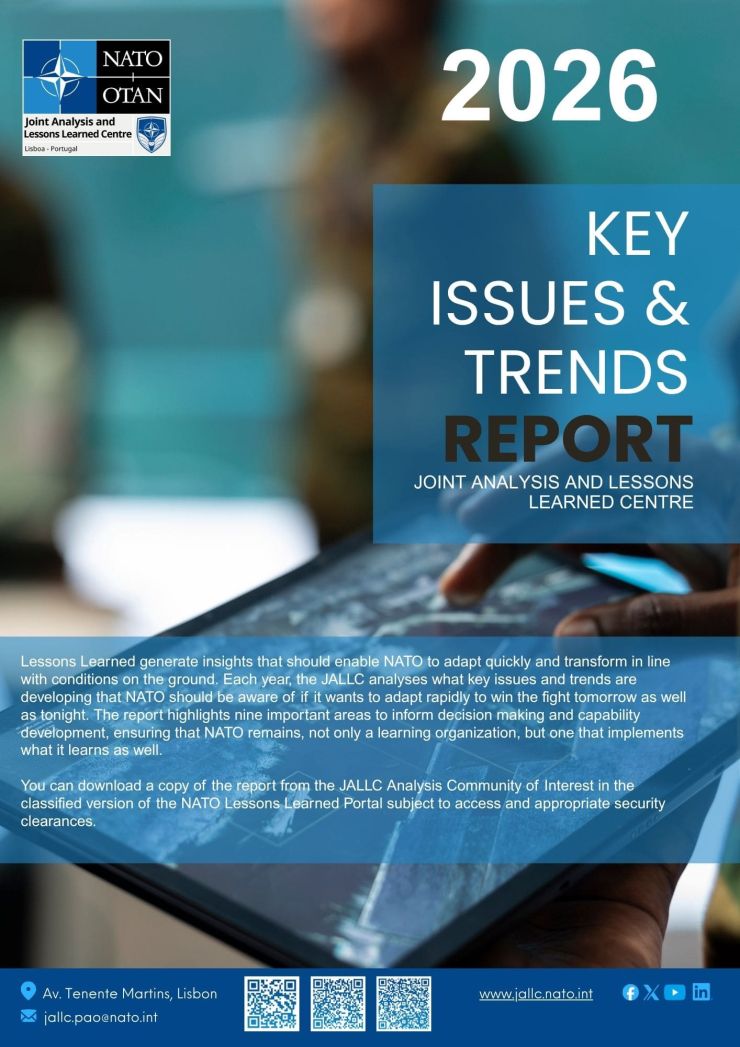
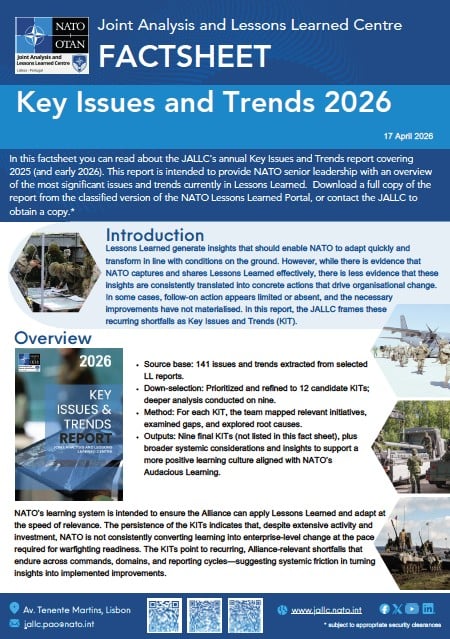
Click on the cover of the KIT Report (left) to download a copy of the KIT Xplainer setting out the main topics featured in the 2026 KIT Report. Or click on the image of the Factsheet to download your copy and find out more about how the KIT contributes to NATO adaptation and transformation.
The KIT report highlights nine important areas to inform decision making and capability development, ensuring that NATO remains, not only a learning organization, but one that implements what it learns as well.
You can download a full copy of the KIT report from the JALLC Analysis Community of Interest in the classified version of the NATO Lessons Learned Portal subject to access and appropriate security clearances.